
National Nutrition Month – Missouri Highlands Health Care
As the weather begins to warm, many people start thinking about gardening season. Seed catalogs come out, garden soil is prepared, and greenhouse plants begin appearing at local markets. It’s also the time of year when fresh, homegrown foods come to mind—like the delicious Campbell peaches many in our area look forward to each season.
March is also National Nutrition Month, an annual campaign focused on helping people learn how food choices can support better health. The 2026 theme is “Discover the Power of Nutrition.”
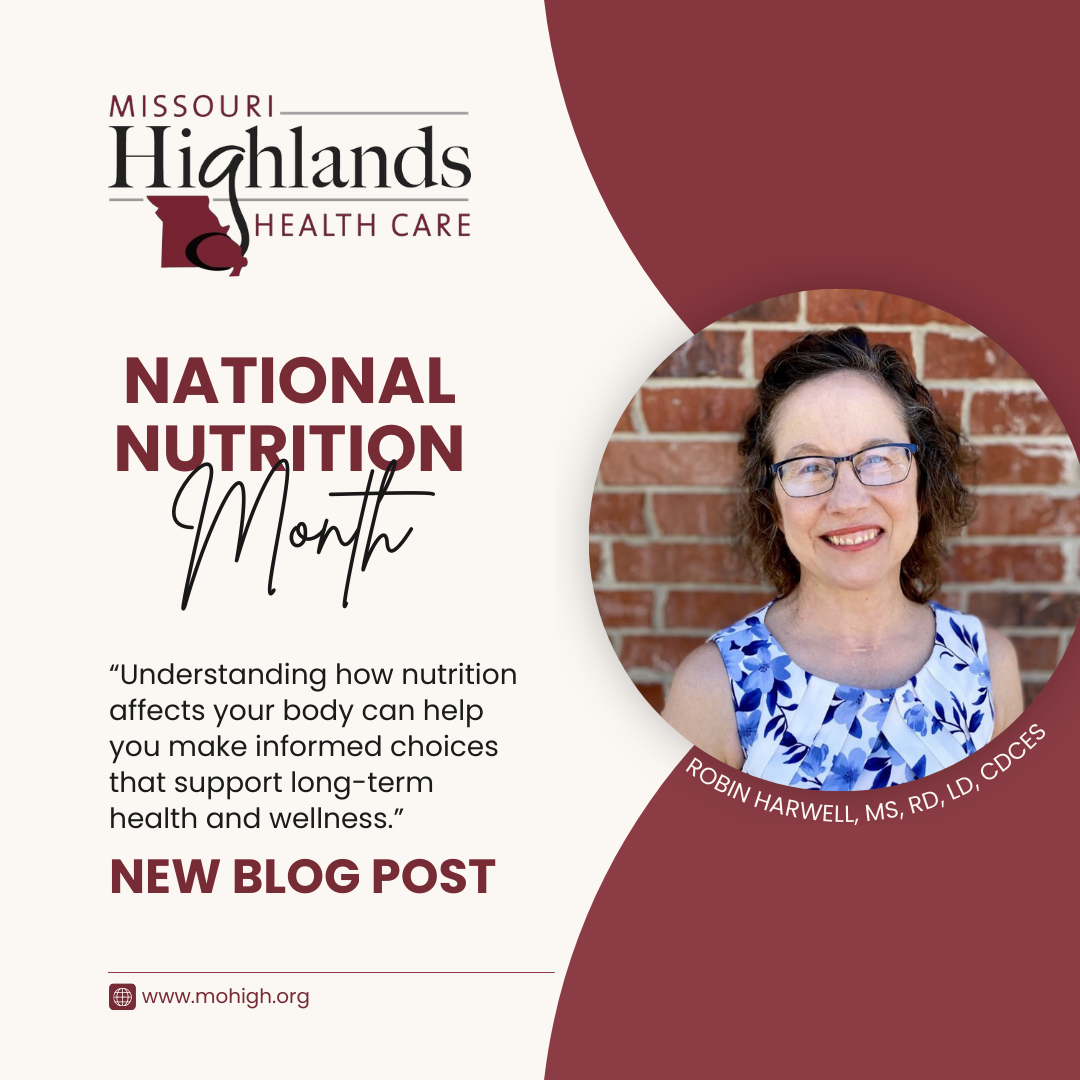
Understanding how nutrition affects your body can help you make informed choices that support long-term health and wellness.
At Missouri Highlands Health Care, Registered Dietitian Nutritionists Robin Harwell, MS, RD, LD, CDCES, and Shanna Carr, RD, LD, provide personalized nutrition counseling and education to help patients meet their individual health goals.
Why Nutrition Matters for Your Health
Good nutrition fuels your body and supports many essential functions, including:
- Maintaining healthy muscles
- Supporting your immune system
- Helping the body heal and recover
- Reducing the risk of chronic diseases such as diabetes and heart disease
One simple way to support your health is to build balanced meals that include foods from all major food groups.
Power Your Day with Whole Foods
A healthy diet often includes fiber-rich grains, colorful fruits and vegetables, and quality sources of protein.
Whole grains, fruits, vegetables, and legumes provide essential nutrients such as vitamins, minerals, and dietary fiber. They also contain natural plant compounds called phytochemicals, which may help reduce the risk of chronic disease.
Adding a variety of colors to your plate is a simple way to ensure you’re getting a wide range of nutrients. Bright fruits and vegetables like leafy greens, berries, carrots, and peppers all provide different health benefits.
The Importance of Protein
Protein plays a key role in keeping the body strong and functioning properly. It helps:
- Build and maintain muscle
- Carry oxygen throughout the body
- Support immune health
- Aid in healing and tissue repair
Many people get protein from animal-based foods, including:
- Beef and pork
- Venison
- Poultry
- Fish
- Eggs
- Milk and dairy products
However, plant-based proteins can also be a valuable part of a healthy diet.
Foods like soy and quinoa are examples of plant-based proteins that contain all nine essential amino acids, making them complete proteins.
Other plant foods such as beans, lentils, and grains may be incomplete proteins on their own but can form complete proteins when combined. A classic example is red beans and rice, while a garden salad with black beans, corn, and sunflower seeds is another nutritious combination.
Making Healthy Eating More Affordable
Healthy eating doesn’t have to be complicated or expensive. Resources from organizations like the University of Missouri Extension provide helpful tips for preparing balanced meals with foods you may already have at home.
These resources include guidance on:
- Making the most of your grocery budget
- Packing healthy and affordable lunches
- Preparing meals with seasonal produce
- Using foods from your refrigerator, freezer, or pantry
Many recipes also highlight creative ways to include more vegetables and plant-based proteins in meals.
Heart-Healthy Nutrition Tips
Small changes in daily habits can make a big difference for your long-term health. Consider these simple heart-healthy nutrition tips:
- Choose lean meats such as fish, venison, poultry, or lean cuts of beef and pork
- Cook with liquid vegetable oils like olive, canola, corn, soybean, or safflower oil
- Limit saturated fats such as butter, shortening, lard, beef tallow, and coconut oil
- Read food labels to avoid trans fats or partially hydrogenated oils
These small adjustments can help support heart health and reduce the risk of chronic disease.
Healthy Habits That Make a Difference
Healthy living isn’t about perfection—it’s about building habits that work for your lifestyle.
A few simple steps include:
- Planning meals for the week
- Keeping an updated grocery list
- Adding more vegetables to meals
- Choosing lean proteins
- Staying physically active
For many adults, a good goal is to include at least 30 minutes of physical activity each day. Walking is a great option that works for many people.
As you discover the power of nutrition, remember that small changes can make a big impact on your health.
If you’re interested in learning how nutrition can support your health goals, talk with your health care provider about a referral to see one of the Registered Dietitian Nutritionists at Missouri Highlands Health Care.